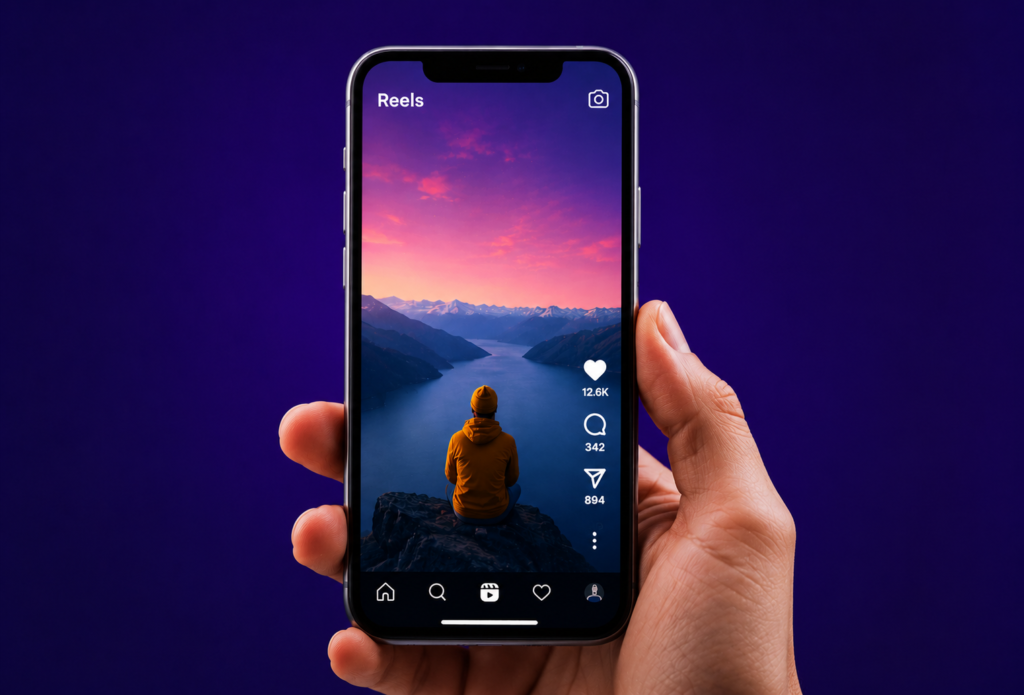
Why creators, founders, and coaches use short videos to build authority.
Why Short-Form Video Is So Powerful
Short-form video has become one of the simplest ways for creators, founders, coaches, and personal brands to get noticed online.
Platforms such as Instagram, TikTok, YouTube Shorts, and LinkedIn increasingly favor visual content that delivers value quickly.
For personal brands, this creates an important opportunity:
You don't need a huge audience to start building authority. You need useful content that people remember.
A well-made short video can introduce your expertise to hundreds or thousands of people who have never heard of you before.
1. Video Builds Trust Faster
People want to know who is behind a brand.
Written posts can communicate your knowledge, but video also communicates your:
- Personality
- Communication style
- Confidence
- Expertise
- Energy
- Point of view
When people repeatedly see and hear you, your brand becomes more recognizable.
Over time, that familiarity can turn casual viewers into followers, subscribers, leads, and customers.
2. You Can Demonstrate Expertise
One of the biggest advantages of short-form video is the ability to teach something quickly.
Instead of simply saying:
“I'm a marketing expert.”
Show it.
Create videos such as:
- “3 mistakes new founders make”
- “How to improve your landing page”
- “One marketing strategy you should try”
- “What I learned from building my business”
- “3 tools I use every week”
Every useful video becomes a small demonstration of your expertise.
3. Short Videos Increase Discoverability
Short-form content can reach people outside your existing audience.
A single video can be discovered through recommendations, search, shares, and social feeds.
This makes short-form video particularly valuable for growing personal brands because your audience doesn't have to already know your name.
Your content can introduce you to them.
Content becomes your discovery engine.
4. Consistency Creates Recognition
You don't need to publish five videos every day.
What matters more is developing a sustainable publishing rhythm.
For example:
Monday: Educational tip
Wednesday: Personal experience
Friday: Industry insight
Sunday: Quick tutorial
After several weeks, your audience begins to recognize your topics, style, and voice.
Consistency also makes content creation easier because you aren't starting from zero every time.
5. Tell Stories Instead of Just Sharing Information
Information is useful.
Stories are memorable.
Instead of saying:
“You should be consistent with your content.”
Tell a short story:
“I stopped posting for three weeks because I thought my content wasn't working. When I started again, I realized the problem wasn't consistency — it was that I wasn't giving people a reason to care.”
Stories create context and emotion around your expertise.
That makes your message easier to remember.
6. Turn One Idea Into Multiple Videos
You don't need a completely new idea for every video.
Start with one strong topic and break it into smaller pieces.
For example:
Main topic:
How to grow a personal brand
Turn it into:
- 3 personal branding mistakes
- How to choose your niche
- How often should you post?
- Why your content isn't getting engagement
- How to create a recognizable visual style
- How to turn followers into customers
One idea can become an entire content series.
7. Focus on Value, Not Virality
Going viral can feel exciting, but viral views don't automatically create a strong personal brand.
A better question is:
“Did this video attract the right people?”
A video with 10,000 views from your target audience can be more valuable than a video with 500,000 views from people who have no interest in what you do.
Your goal should be to build relevant attention.
A Simple Short-Form Video Formula
Use this structure when creating your next video:
Hook
Grab attention immediately.
Problem
Identify something your audience struggles with.
Value
Give a useful insight, tip, or solution.
Example
Show how the idea works in practice.
CTA
Tell viewers what to do next.
For example:
“If you're building a personal brand, stop trying to talk to everyone.”
Then explain why choosing a specific audience makes content easier.
Finish with:
“Follow for more practical personal-brand strategies.”