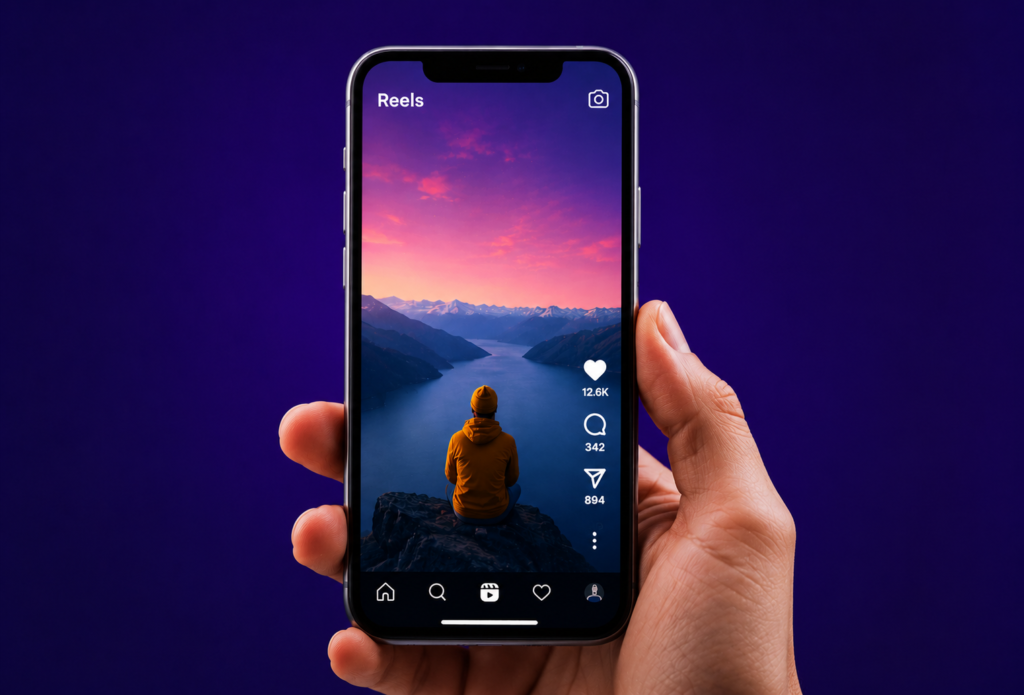
Turn podcasts, webinars, and interviews into weeks of content.
One Long Video Can Become Weeks of Content
Creating fresh content every day can quickly become exhausting.
But if you're already creating long-form content such as podcasts, webinars, interviews, workshops, or YouTube videos, you may already have dozens of short-form ideas hidden inside your existing content.
The key is to stop treating a long video as one piece of content.
Instead, think of it as a content library.
A single 60-minute interview could potentially become:
- 5–10 short videos
- Quote graphics
- Educational posts
- Carousel ideas
- Social media captions
- Blog topics
- Email content
The goal isn't simply to cut a long video into smaller pieces.
It's to find the moments that work independently as valuable content.
1. Start With Your Best Long-Form Content
Choose long videos that already contain useful information.
Good sources include:
- Podcasts
- Webinars
- Interviews
- Tutorials
- Product demonstrations
- Customer conversations
- Conference talks
- Q&A sessions
- YouTube videos
Start with content that has multiple useful ideas rather than a video that focuses on only one simple topic.
2. Find the Strongest Moments
Don't simply cut the video every 30 seconds.
Look for moments that have a clear beginning, middle, and end.
The strongest clips often contain:
A Strong Opinion
“Most businesses are approaching content completely backwards.”
A Useful Tip
“Here's the simplest way to improve your landing page.”
A Personal Story
“We made this mistake when we first launched.”
A Surprising Insight
“More traffic wasn't actually the solution.”
A Direct Answer
“If I were starting again today, this is what I'd do.”
These moments can often stand on their own without requiring the viewer to watch the original long video.
3. Turn Each Clip Into Its Own Story
A common mistake is taking a random section from a podcast and uploading it without context.
Instead, structure each Short so that a new viewer can understand it immediately.
A simple structure is:
Hook → Context → Value → Takeaway
For example:
Hook:
“Most creators are wasting their best content.”
Context:
“They spend hours creating new posts while their existing videos contain dozens of unused ideas.”
Value:
“Take your longest videos and identify every strong question, opinion, story, and lesson.”
Takeaway:
“One long video can become an entire week of content.”
Now the clip makes sense even if the viewer has never seen the original video.
4. Add a New Hook
The original introduction of your podcast or webinar probably wasn't designed for short-form content.
That's okay.
You can create a new opening specifically for the Short.
Instead of beginning with:
“Welcome back to today's podcast…”
Start with:
“Here's the biggest mistake creators make when repurposing content.”
Then move directly into the relevant part of the original conversation.
This removes unnecessary setup and gets viewers to the value faster.
5. Make the Video Easy to Watch Without Sound
Many viewers encounter short-form videos while scrolling with sound turned off.
Captions help make the content understandable.
Use:
- Large readable captions
- Short sentences
- Highlighted keywords
- Clear spacing
- Good contrast
- Proper timing
Don't cover the speaker's face or important visual information with captions.
Your text should support the video rather than compete with it.
6. Create Different Formats From the Same Video
Repurposing doesn't mean creating the exact same Short repeatedly.
Take different ideas from the same source and turn them into different formats.
For example, from a 45-minute podcast you could create:
Short 1:
“3 mistakes founders make when hiring.”
Short 2:
“The biggest lesson I learned from my first startup.”
Short 3:
“Why most marketing strategies fail.”
Short 4:
“What I would do differently if I started today.”
Short 5:
“One simple strategy to get your first customers.”
Each Short targets a different idea while coming from the same original recording.
7. Add Context for New Viewers
Remember that most people watching your Short may not know the speaker.
Give them enough context to understand why the clip matters.
You can use a short text introduction such as:
“A founder explains the biggest mistake he made during his first year.”
Or:
“Here's what a marketing expert says about building an audience from zero.”
A few words of context can make an otherwise confusing clip much easier to follow.
8. Build a Content Repurposing System
The easiest way to stay consistent is to create a repeatable workflow.
Step 1 — Record
Create one strong long-form piece of content.
Step 2 — Review
Identify the strongest moments.
Step 3 — Extract
Turn those moments into individual clips.
Step 4 — Edit
Add hooks, captions, graphics, and branding.
Step 5 — Organize
Save the finished clips in a content library.
Step 6 — Publish
Distribute them across your relevant platforms.
Step 7 — Analyze
Look at views, retention, engagement, shares, and saves.
Then use those insights to decide what type of content to create next.
9. Don't Chase Quantity Alone
Repurposing allows you to create more content, but more content isn't automatically better content.
A strong Short should still have:
- A clear idea
- A strong opening
- Useful information
- Good pacing
- Readable captions
- A satisfying conclusion
The objective isn't to turn every second of a podcast into a video.
The objective is to extract the most valuable moments.
A Simple Repurposing Formula
Use this process whenever you have a new long-form video:
1 Long Video → 5–10 Short Clips → Multiple Social Posts
Then take your best-performing Shorts and turn those ideas into:
Carousels → Blog Posts → Emails → New Videos
This creates a content ecosystem where one strong idea continues generating value.