How to tailor one edit for each platform's audience.
One Video, Three Different Audiences
Instagram Reels, TikTok, and YouTube Shorts all use short-form video, but that doesn't mean the exact same edit will perform equally well on every platform.
Each platform has its own audience behavior, content culture, discovery system, and expectations.
Instead of creating three completely different videos, you can create one strong piece of content and adapt the presentation for each platform.
The goal is:
Create once → Adapt strategically → Publish everywhere.
1. Instagram Reels
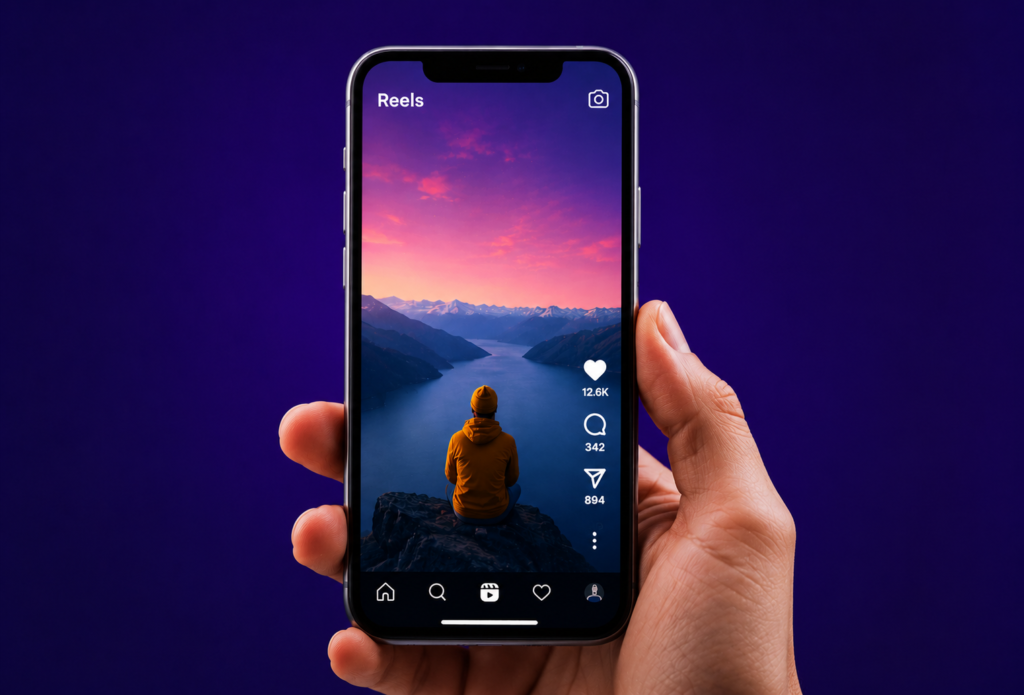
Instagram Reels are closely connected to the creator's overall profile and personal brand.
A viewer may discover your Reel and then immediately visit your profile to see your other content.
This makes visual consistency especially important.
Reels work well for:
- Personal branding
- Lifestyle content
- Educational tips
- Behind-the-scenes content
- Product showcases
- Creator content
- Community-focused videos
Editing approach
Keep your video visually polished and aligned with your existing brand.
Consider using:
- Consistent fonts
- Brand colors
- Clean captions
- Strong cover images
- Recognizable visual patterns
Your Reel should not only earn a view.
It should make someone interested enough to explore your profile.
2. TikTok
TikTok is strongly driven by discovery and content that feels native to the platform.
Videos don't necessarily need to look highly produced.
In many cases, authenticity and personality can be more important than a polished production style.
TikTok works well for:
- Trends
- Stories
- Humor
- Opinions
- Tutorials
- Educational content
- Personal experiences
- Quick reactions
Editing approach
Get to the point quickly.
Avoid long introductions.
Use conversational language and allow your personality to come through.
A simple opening such as:
“I tried this for 30 days, and here's what happened.”
can immediately create curiosity.
Don't be afraid to make the video feel natural rather than overly corporate.
3. YouTube Shorts
YouTube Shorts benefit from being part of a larger YouTube content ecosystem.
A Short can introduce viewers to your channel and potentially lead them toward longer videos.
Shorts work well for:
- Educational content
- Tutorials
- Quick explanations
- Interesting facts
- Clips from long-form videos
- Commentary
- Entertainment
Editing approach
Make the topic immediately clear.
A viewer should understand what the Short is about almost instantly.
For example:
“Here's how I edit every Short in under 10 minutes.”
You can then provide the key steps and direct interested viewers toward related long-form content.
4. Don't Upload the Exact Same Edit Everywhere
The biggest mistake is creating one video, downloading it with a watermark, and uploading it unchanged to every platform.
Instead, create a clean master version.
Then make small adjustments for each platform.
For example:
Master Video
Create the original edit without platform-specific elements.
↓
Instagram Version
Adjust the cover, captions, and branding.
↓
TikTok Version
Make the opening more conversational and platform-native.
↓
YouTube Version
Make the topic clear and connect it to your broader channel content.
The core video can remain the same.
The presentation changes.
5. Adapt the Hook
The hook is one of the easiest things to customize.
Imagine your original topic is:
“How to build a personal brand.”
“3 things I would do if I had to rebuild my personal brand from zero.”
TikTok
“If I had zero followers today, this is exactly how I'd start.”
YouTube Shorts
“Here's a simple 3-step personal branding strategy.”
Same idea.
Different framing.
6. Adapt the Captions
Captions should match the style of the platform and your audience.
For Instagram, you might use a polished branded caption style.
For TikTok, you might use more conversational and dynamic text.
For YouTube Shorts, you might prioritize clarity and readability.
Regardless of platform:
Keep captions short, readable, and synchronized with the speech.
7. Adapt the Call to Action
Don't use the exact same CTA everywhere.
Instead, think about what you want viewers to do next.
“Follow for more creator tips.”
TikTok
“Follow for part two.”
YouTube Shorts
“Watch the full video on the channel.”
The best CTA depends on where you want the viewer to go next.
8. Think About the Audience
The same topic can be presented differently depending on the audience.
For example, imagine you're sharing a video about video editing.
Instagram Audience
May respond well to:
Beautiful visuals + practical editing tips
TikTok Audience
May respond well to:
Fast explanation + personality + relatable experience
YouTube Audience
May respond well to:
Clear educational value + connection to deeper content
The topic doesn't have to change.
The angle does.
Platform Comparison
| Feature | Instagram Reels | TikTok | YouTube Shorts |
|---|---|---|---|
| Main Strength | Personal brand | Discovery & trends | YouTube ecosystem |
| Style | Polished + visual | Native + conversational | Clear + informative |
| Strong Content | Creator & lifestyle | Trends & stories | Education & entertainment |
| Hook | Visual + curiosity | Direct + conversational | Clear + value-focused |
| CTA | Follow / Profile | Follow / Part 2 | Watch More |
| Best Opportunity | Brand building | New audience discovery | Channel growth |
A Simple Multi-Platform Workflow
You don't need to triple your workload.
Use this process:
Step 1 — Create One Master Video
Edit the core story and remove unnecessary sections.
Step 2 — Create Three Versions
Make small platform-specific adjustments.
Step 3 — Change the Hook
Customize the first few seconds.
Step 4 — Adjust Captions
Match your visual style to each platform.
Step 5 — Customize the CTA
Give viewers a natural next action.
Step 6 — Publish Separately
Upload clean versions directly to each platform.
Step 7 — Compare Performance
Track retention, engagement, shares, saves, and follows.
Then use the results to improve your next videos.
What Should Stay the Same?
Not everything needs to change.
Your core:
- Topic
- Main idea
- Story
- Value
- Footage
- Brand identity
can remain consistent.
What you adapt is the packaging.
Think of it like this:
Same idea + different packaging = platform-native content.